
When alignment at the top needs strengthening

Building leadership coherence where it matters most

At the executive level, a group of smart, capable individuals does not automatically result in a team.

At the executive level, leadership cannot operate leader by leader. It operates as a team and as a leadership system.

What matters is how leaders operate together, how decisions are made, how pressure is held, and what leadership behaviour normalises across the organisation.

Executive team alignment cannot be addressed through individual work alone.

Individual capability must be cultivated in service of the team. And the team must be aligned well enough and inclusive enough to use that capability to best effect.

When both are addressed together, alignment is not short-lived. It locks in and the organisation moves with greater coherence, pace and trust.
Executive Team Alignment

Shared Purpose, values, goals and standards.

THIS WORK INTEGRATES

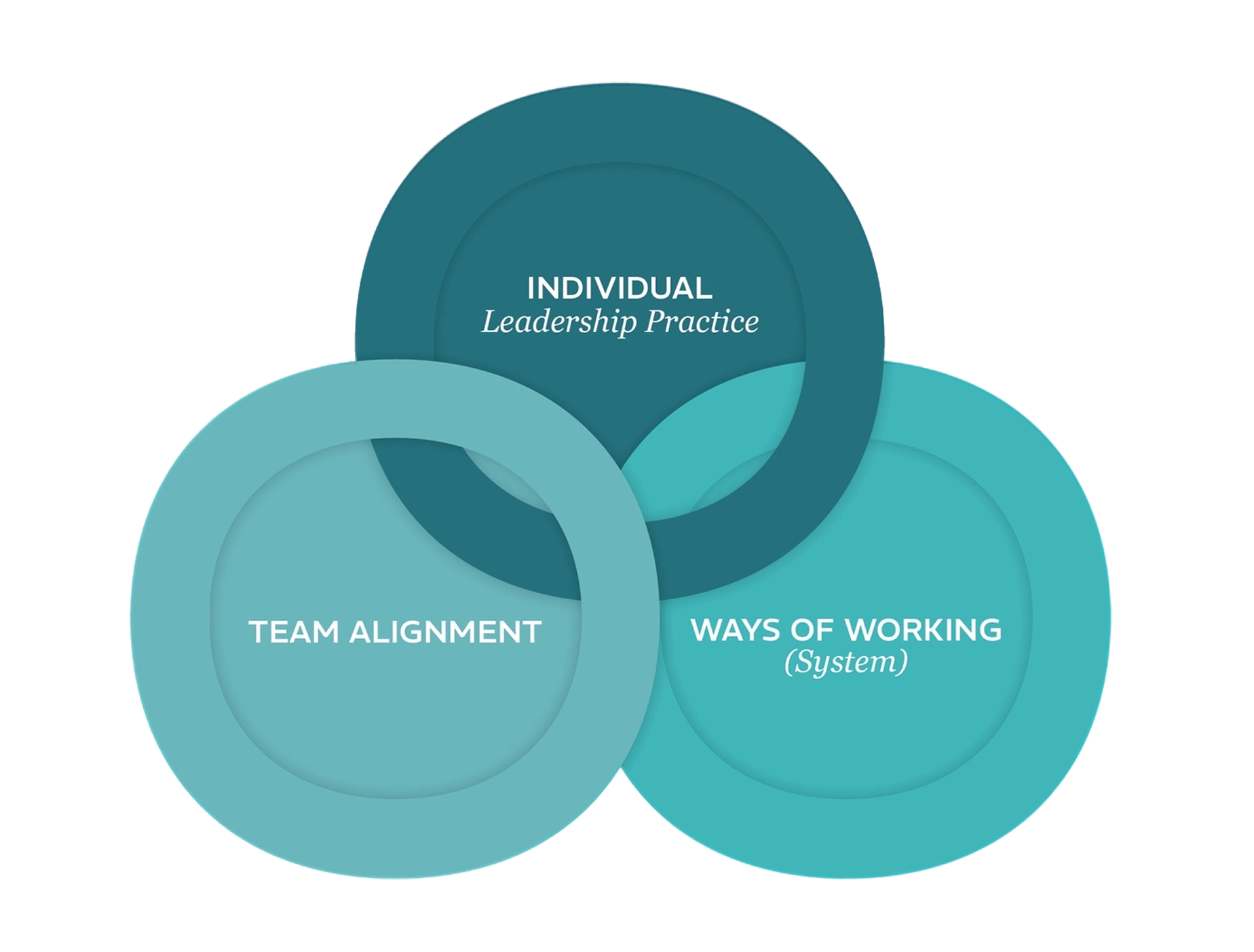
Three Inseparable Elements
diagram
Executive Team Alignment
Shared Purpose, values, goals and standards.
Ensuring each leader has the judgement, steadiness, and capability required to contribute effectively to the team
The shared decision rules, rhythms, and processes the executive team uses to prioritise, align, and execute.

Executive Team Alignment

Shared Purpose, values, goals and standards.

Individual Leadership Practice

Ensuring each leader has the judgement, steadiness, and capability required to contribute effectively to the team

Decision Making and Ways of Working (System)

The shared decision rules, rhythms, and processes the executive team uses to prioritise, align, and execute.

What This Work Addresses

The specific focus is shaped by the context and needs of each team.

Common areas of work include:

Collective Purpose And Focus

Clarifying what this executive team is responsible for delivering together — and the legacy of leadership it intends to leave.

Decision-Making And Authority
Strengthening how the team operates at the right level, on the right issues, with clear decision rights and disciplined collective judgement.
Team Coherence Under Pressure
Moving from a group of capable individuals to a leadership team that knows when to collaborate, when to delegate, and when to hold the line together.
Leadership Behaviour And Cultural Impact
Making visible the behaviours that strengthen alignment — and those that quietly erode it — and establishing shared standards that hold over time.
Culture Creation At The Top

Agreeing the culture the executive team must model and sustain if momentum, trust, and performance are to be maintained across the organisation.

When This Work Is

Most Valuable

The team in its current formation is new, or has new members.

New strategy or growth ambitions are not translating into execution.

The executive team is under sustained pressure and alignment is slipping.

Post-merger or transition requires a new way of leading together.

Cultural signals from the top are inconsistent or unclear.

Let’s talk

Intake is intentionally limited to preserve depth, discretion, and quality of partnership. A confidential conversation is the first step in determining fit. 


Practical Insights for 


Leaders Navigating Change

What CEO’s Regret

Endurance Is Not a Leadership Strategy in an Always-On World

CEO CUltural Tripwires

Culture Doesn’t Drift It Defaults

Culture is the Performance Management System You’re Already Running

Culture-Strategy Sense Check 

Designed for leaders navigating complexity and change, this short sensecheck offers a simple and quick structured way to reflect if your culture is helping or hindering your strategy

2026-01-13_corinne_canter_business-card-newsletter 1

Sign up today to receive considered insights on leadership and culture.